Section 5: Fundamentals of Speaker Recognition
5.1 What is speaker recognition?
Speaker recognition(화자 인식) system이 무엇인지 알아보기 전에 다른 개념들과 명확하게 구분지어 보자.
-
Voice identity technique speaker recognition
엄밀히 말하면 speaker recognition은 voice identity technique의 하위 집합이다.(하위 집합이기는 하나 핵심적인 기술에 해당된다.)
voice identity technique: speaker diarization, voice clone, voice separation, Personalized VAD/ASR 등
-
"who is speaking?" 질문에 대한 답을 찾는 기술이다.
-
간혹 다른 명칭으로도 불린다.
speaker recognition = voice recognition, voiceprint recognition, talker recognition
5.1.1 Speaker vs speech recognition
또한 speaker recognition과 speech recognition은 서로 다른 개념이다. 두 문제는 서로 orthogonal한 관계이므로 주의해야 한다.
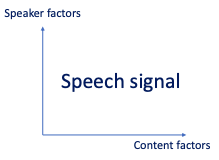
- speaker recognition
"Who is speaking?". 무슨 내용을 말하는지는 중요하지 않다.
speech organs(vocal folds, vocal tract), age, gender, language, accent, dialect, life experience, personal preference 등이 중요하다.
- speech recognition
"What was spoken?". 누가 말하는지는 중요하지 않다.
5.2 Speaker recognition by task
speaker recognition 문제는 분류하고자 하는 크기에 따라, 크게 Speaker Verification(SV), Speaker Identification(SID) 두 가지 task로 분류할 수 있다.
| Speaker Verification(SV) | Speaker Identification(SID) |
|---|---|
| single candidate | multiple candidates |
| Yes/No binary classification | 다양한 multi-class classification |
| "Did he/she speak it?" | "Did one of them speak it? If yes, who?" |
| wake up system, security 등에 사용 | Personalization 등에 사용 |
5.2.1 Speaker Verification
먼저 SV에서는 target speaker가 주어지고, 이 사람이 맞는지 아닌지를 판별하는 문제이다.
-
enrollment/registration 과정을 통해 voiceprint representation을 갖는다.
-
runtime에서는 voiceprint와 비교하여 score를 계산한다.
-
score가 threshold를 넘으면 target speaker로 판별한다.(binary decision)
5.2.1 Speaker Identification
SID는 speaker matching으로도 부르며, 명의 candidate speaker 집합에서 classification을 수행한다.
- closed set SID
runtime audio는 오직 classification을 수행한다.
- open set SID
runtime audio가 imposter를 포함한 classification을 수행한다.
- 만약 speaker 전원에서 제대로 verified되지 않는다면, imposter로 판별한다.
이러한 특성 떄문에 이 크면 클수록 문제는 어려워진다.(비슷한 목소리를 가진 speaker가 더 많이 포함된다.)
5.3 Textual content
text content가 가진 성격에 따라서도, speaker recognition 문제를 구분할 수 있다.
-
Text-dependent(TD)
-
Text-independent(TI)
-
Text-prompted(TP)
이에 따라 6가지 종류의 problem이 존재하게 된다.
- TD-SV, TI-SV, TP-SV, TD-SID, TI-SID, TP-SID
5.3.1 Text-dependent speaker recognition
다른 말로 fixed-text speaker recognition이라고도 부른다. 언제나 spoken phrase가 동일하므로 problem은 굉장히 단순하게 정의된다.
"Hey Google", "Hey Siri"과 같은 wake words나 password tokens가 이에 해당한다.
- 몇 가지 초창기 algorithm은 오직 text-dependent에만 적용할 수 있었다.
pattern matching, early statistical methods
- phoneme variation이 적다.
소량의 phonemes만을 구분할 수 있는 model을 사용해도 된다.
- audio length variation이 적다.
간편히 fixed-length window를 사용할 수 있다.
5.3.2 Text-independent speaker recognition
다른 말로 freeform speaker recognition이라고도 부른다. 무엇을 말하든지 상관이 없으며, 그만큼 문제는 어려우나 유용하다.
-
단, 언어에 따라서 dependency가 달라지게 된다.
-
language-dependent
-
language-independent
-
enrollment와 recognition의 phase가 서로 다르다.
예를 들어 enroll은 "What is the weather"이었지만, recognition은 "How is the weather"라는 phase가 주어질 수 있다.
-
training과 runtime에서의 차이가 크다.
-
실제 runtime에서 입력으로 주어지는 speaker/sentences의 가능성은 사실상 무한하지만 training data는 유한하다.
-
runtime에서는 audio length가 초 단위가 될지 분 단위가 될지도 알 수 없다.
5.3.3 Text-prompted speaker recognition
speaker recognition 문제는 imposter의 record attacks에 취약할 수밖에 없다.
- text-dependent
word/password sequence를 녹음하여 사용할 수 있다.
- text-independent
어떠한 sequence든 녹음하여 사용할 수 있다.
따라서 이러한 보안의 취약성을 보완하기 위해 text-prompted speaker recognition이 등장했다. system prompts는 매 시도마다 speaker에게 다른 text를 읽도록 제시한다.
예를 들어 첫 시도에서는 "Open sesame"를 제시하고, 다음 시도에서는 "Open watermelon"을 제시한다.
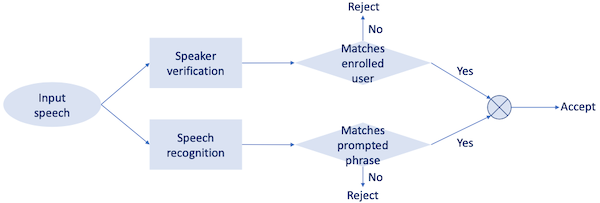
이때 지원하는 phrases 수인 vocabulary size 에 따라 difficulty가 달라지게 된다.
-
trade-off
-
이 너무 작으면 record/replay가 쉬워 unsafe하다.
-
이 너무 크면 사용자가 등록해야 하는 phrases가 많으므로 user experience가 나쁘다.
참고로 을 극단적으로 두고 보면, : text-dependent, : text-independent가 된다. 따라서 다음과 같은 구현이 가능하다.
- 이 작을 때
text-dependent models(한 phrase당 한 모델)
- 이 클 때
단일 text-independent model을 사용한다.
물론 이 둘을 결합해서도 사용할 수 있다. 예를 들어 "Ok Google play my favorite songs"라는 phrase를 사용한다고 하자.
-
"Ok Google": text-dependent model 입력으로 보낸다.
-
"play my favorite songs": text-independent model 입력으로 보낸다.
5.4 System Triage
단, computational complexity를 줄이기 위해서는 expensive model은 오직 필요할 떄만 사용해야 한다.
small & cheap model: usually text-dependent model / large & expensive model: usually text-independent model.
- cheap model: high score을 갖는 경우
confident accept. 따라서 expensive model을 사용할 필요가 없다.
- cheap model: low score을 갖는 경우
confident reject. 따라서 expensive model을 사용할 필요가 없다.
- cheap model: intermediate score을 갖는 경우
unconfident. 따라서 final decision을 위해 expensive model을 사용한다.
5.5 System Workflow
speech recognition system의 workflow는 다음과 같이 크게 3단계로 구성된다.
-
model development
-
training stage
-
model at runtime
-
enrollment stage
-
recognition stage
5.5.1 Training Stage
machine learning model을 학습시키는 단계로, 모델은 statistical model일 수도 있고, weight/bias를 갖는 neural network일 수도 있다. 다만 이때 단순히 "model"이라고 지칭하면 안 된다. 각 speaker에 dependency를 갖는가에 따라서도 model의 성격이 크게 달라지기 때문이다.
- speaker-dependent model
voiceprint와 같이 각 speaker의 representation을 갖는다.
-
speaker embedding
-
speaker profile
-
speaker-independent model
speaker embedding을 만들어내는 global machine learning model을 갖는다.
- speaker encoder
5.5.1.1 Embedding Learning
이처럼 speech recognition은 embedding learning problem(=representation learning)으로 볼 수 있다.
- speaker encoder
feature frames으로 구성된 sequence를 단일 fixed-dimension vector로 변환한다.
-
training: speaker encoder의 parameter를 학습하는 단계이다. (runtime에서는 parameter가 고정된다.)
-
sequence of feature frames: feature extraction을 통해 얻는다.
-
vector: speaker embedding과 동의어. speaker의 unique feature를 나타낸다.
speaker embedding의 대표적인 예시로 supervector, i-vector, d-vector가 있다.
5.5.2 Enrollment Stage
다음은 runtime에 해당되는 enrollment stage를 살펴보자.
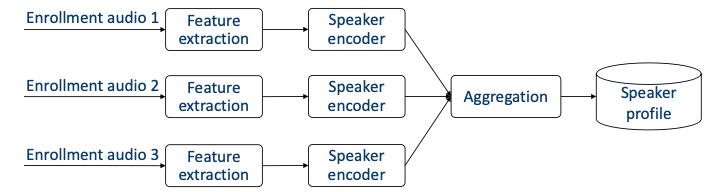
-
여러 speaker가 multiple enrollment audio clips를 제공한다.
-
Aggregation
embedding을 profile로 변환하는 과정을 의미한다. 대표적으로 average, normalize-and-average, concatenate 같은 방법이 있다.
-
각 speaker는 multiple enrollment utterances를 가진다. 이를 바탕으로 speaker embedding을 얻는다.
-
각 embedding은 speaker의 single representation으로 aggregate된다.
-
출력으로 speaker profile을 얻는다.
5.5.3 Recognition Stage
runtime의 recognition stage은 다음과 같이 진행된다.
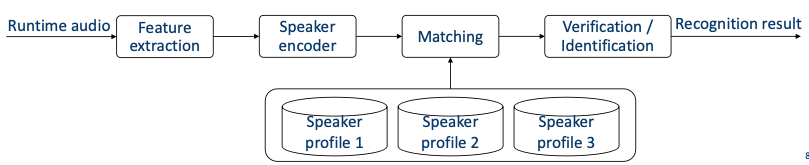
-
enrollment stage와 동일한 feature extraction과 speaker encoder 과정을 거친다.
-
speaker encoder의 출력은 이전에 등록된 speaker profile과 비교된다.
5.5.4 Summary of System Workflow
stage별 입출력을 바탕으로 system workflow를 요약하면 다음과 같다.

| Stage | Inputs | Outputs |
|---|---|---|
| Training | Training data (Audio clips from many different speaker) |
speaker encoder |
| Enrollment | Enrollment audio from the target speaker | Speaker profile of the target speaker |
| Recognition | Runtime audio | Verification/Identification result |
이론적으로는 위 세 가지 과정에서 사용하는 feature extraction이 동일해야 한다. (동일한 frame step/size, window function, FFT, filterbanks 등) 하지만 실제 training에서는 feature extraction 전/후 과정에서 augmentation이 적용되는 경우가 많다.