Section 2: The History of Voice Identity Techniques
2.1 What about voices?
voice는 마치 지문처럼 사람마다 모두 다른 특징을 갖는다.(voiceprint) 게다가 같은 사람이 동일한 단어/음소를 발음하더라도 상황에 따라 다르게 발음할 수 있다.(variation)
게다가 human reading은 다음과 같은 어려움이 있기 때문에, algorithm을 이용한 voice identification의 필요성이 대두되었다.
-
cost
-
voice identification을 위해서는 사람을 고용하고 훈련해야 한다.
-
기술이 필요한 다양한 장소(공항, 경찰서 등)에 deploy해야 한다.
algorithm: 한 번 개발하면 어디든 deploy할 수 있다.
-
-
unreliable
-
같은 traning을 거쳐도 사람마다 다른 결과를 보인다.
-
사람은 익힌 기술을 망각할 수 있다.
algorithm: 같은 입력을 주면 언제나 같은 출력을 내보낸다.
-
2.2 Earliest algorithm: Pattern matching
human reading에서 영감을 받아 spectrogram을 이용한 pattern matching 방법이 제시되었다.
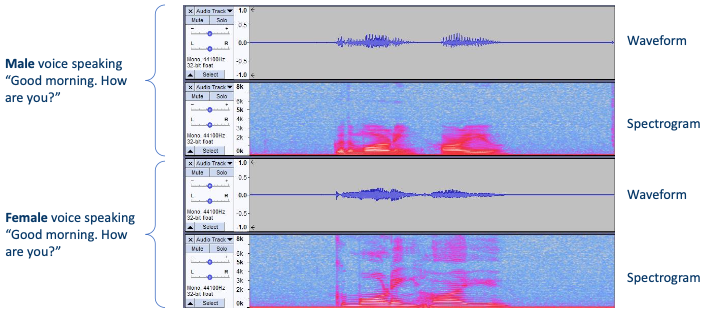
위 spectrogram을 행렬 , 아래 spectrogram을 행렬 라고 하자. 이 둘을 비교하는 수식은 다음과 같다.
-
corr: 두 인자의 correlation coefficient를 반환하는 Python function -
norm이 작을수록 correlation이 크다.
다시 말해 두 행렬(spectrogram)이 유사하며 같은 speaker일 가능성이 크다.
단, 다음과 같은 전제조건(prerequisite)가 필요하다.
-
same content
다시 말해 pattern matching은 Text-dependent하다.
-
alignment
예를 들어 비교를 위해서는 'Good vs Good', 'Morning vs Morning'이 서로 alignment되어야 한다.
2.2.1 Limitations of pattern matching
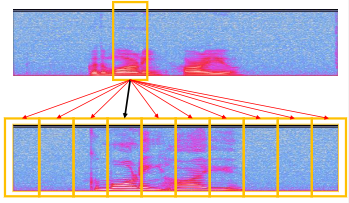
그러나 데이터가 서로 다른 speaking rate를 가지고 있다면 align할 수 없다. 따라서 이러한 문제를 해결하기 위해 per-segment matching이 등장했다.
-
A, B의 각 segment를 비교한 뒤 best match를 찾는다.
-
두 spectrogram이 align되어 있지 않아도 비교할 수 있다.
2.3 Early Statistical Methods
pattern matching은 variations을 고려하지 못한다. 다양한 요소에 의해 같은 단어라도 variation이 생길 수 있다.
recording devices, ambient noise, emotions, utterance(발화) 등
따라서 이러한 variation을 고려할 수 있도록 statistical methods가 등장했다.
-
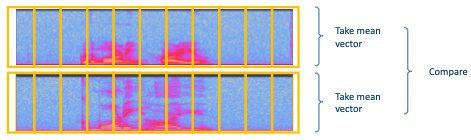
제일 간단한 방법으로는 두 mean vector를 비교할 수 있다.
2.3.1 Gaussian Mixture Models(GMM)
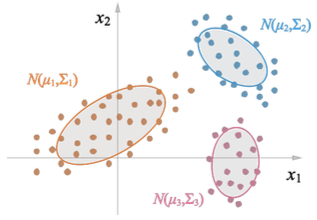
Gaussian Mixture Models(GMM)은 Deep Learning이 등장하기 전 제일 보편적으로 쓰인 statistical model이다.
Speacker Recognition만이 아니라, Computer Vision, Speech Recognition 등 다양한 분야에서 쓰였다.
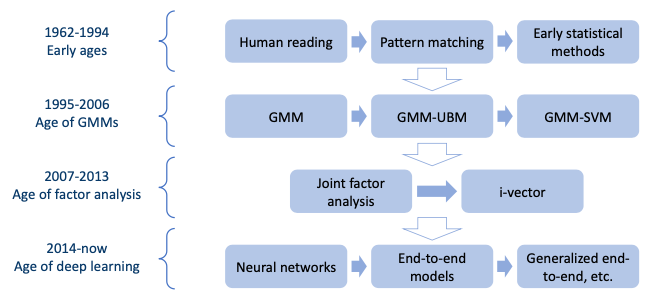
Speaker Recognition에서 시대별로 dominant model을 살펴보면, 1995-2006:GMM / 2007-2013: Factor analysis / 현재: Joint Factor Analysis(JFA), i-vector
-
GMM은 mixture of Gaussian distributions이다.
-
각 Gaussian distribution은 cluster를 의미한다.
-
각 cluster는 speaker를 의미한다.
-
게다가 이러한 Gaussian distribution은 단순할 뿐더러, complex distribution을 simple Gaussian distribution의 합으로 근사할 수 있다는 장점이 있다.
GMM의 변형도 여러가지가 존재하는데 대표적으로는 두 가지가 있다.
-
Gaussian Mixture Model - Universal Background Model(GMM-UBM)
-
Gaussian Mixture Model - Support Vector Machines(GMM-SVM)
2.4 Deep Learning
GMM이 complex functions을 simple Gaussian distribution의 합으로 근사하는 것처럼, NN은 complex functions를 simple function(neuron)의 합으로 근사한다.
특히 speech signal(sequence data)에 있어서 Recurrent Neural Network(RNN)은 굉장히 효과적이다.
big data에 더 효과적이며 GPU, TPU 등의 발전으로 더욱 효율적으로 학습할 수 있게 되었다는 배경도 있다.
다음은 Speaker Recognition에서 대표적인 모델을 시대에 따라 정리한 것이다.
-
Google: d-vector(d = deep)
-
2014: First DNN based speaker recognition system
-
2016: First End-to-End system
-
2018: Generalized End-to-End loss, attention based system 등
-
-
Baidu:
- 2017: Deep Speaker system
-
JHU
- 2018: X-vector
-
SJTU
- 2015: J-vector
2.5 Summary