15 Long-Context LLM
EfficientML.ai Lecture 15 - Long-Context LLM (MIT 6.5940, Fall 2024, Zoom Recording)
긴 문서나 동영상 프레임을 이해하고 싶다고 하자. 하나의 224x224 크기 이미지를 256 token로 계산하면, 1시간 동영상 기준으로는 약 백만 개 토큰이라는 long context를 처리해야 한다.
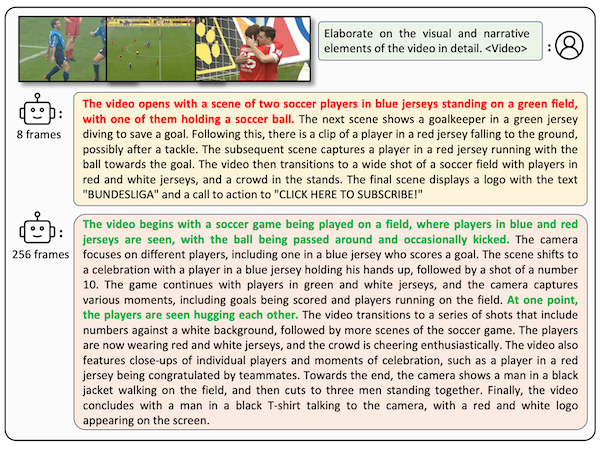
컨텍스트 길이에 따라 메모리 사용량 및 지연시간이 극적으로 증가하므로, 이를 효율적으로 처리하는 것이 중요하다. 이때 일반적인 KV cache compression 기법으로는 LLM의 long context 성능을 저하시킬 수 있으므로, 보다 효율적인 접근법이 필요하다.
백만 개 토큰 처리 기준, 137GB KV cache 메모리(Llama-3-8B), 92 ms/token 지연시간(Llama-3-7B) 발생
15.5 DuoAttention: Retrieval and Streaming Heads
DuoAttention: Efficient Long-Context LLM Inference with Retrieval and Streaming Heads 논문(2024)
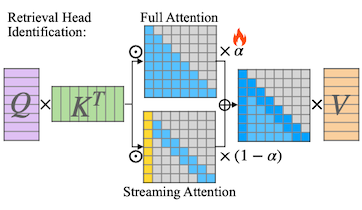
DuoAttention은 long context 성능을 보존하면서 메모리 병목과 지연시간을 최적화하기 위해, 역할을 분할한 attention head 설계를 제안하였다.
-
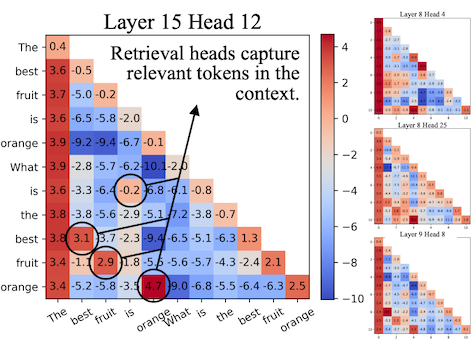
Retrieval Heads: earlier context에서 중요 토큰 포착 (w. full KV cache)
-
Streaming Heads: 최근 토큰 및 attention sink 집중 (w. 최근 토큰으로 구성된 reduced KV cache)
| Heads | Caches |
|---|---|
 |
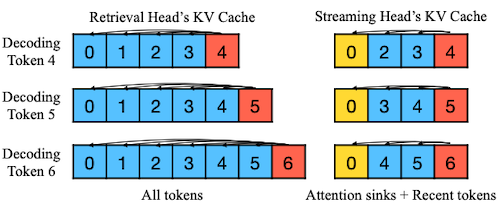 |
노란색 토큰: attention sink, : gate value
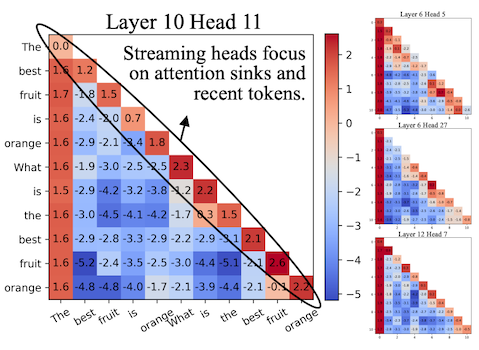
다음은 두 head의 attention map 예시로, 각 head가 어디에 집중하는지 관찰할 수 있다.
| Retrieval Head | Streaming Head |
|---|---|
 |
 |
15.5.1 Identification of Retrieval Heads
DuoAttention은 LLM 가중치는 고정한 채, head를 구분하는 gate 파라미터 만을 학습한다. ( 가 0에 가까울수록 streaming head 사용 )
-
gate 값에 따라 두 head의 비중 조절
-
full attention:
-
streaming attention:
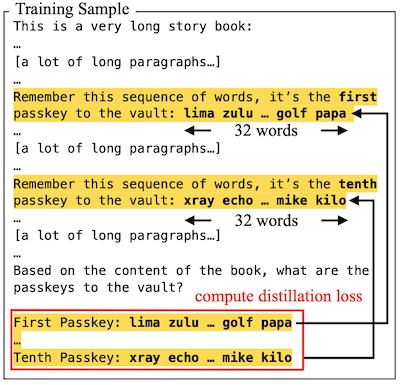
학습은 long-context passkey retrieval task로 이루어지며, passkey 추론 결과를 바탕으로 증류 손실을 계산한다.
- 손실 함수: full attention만 사용하는 모델에서의 증류 항 + 를 작은 값으로 유도하는 L1 정규화 항
| Training Sample | Optimized Gate Value (red:1, blue:0) |
|---|---|
 |
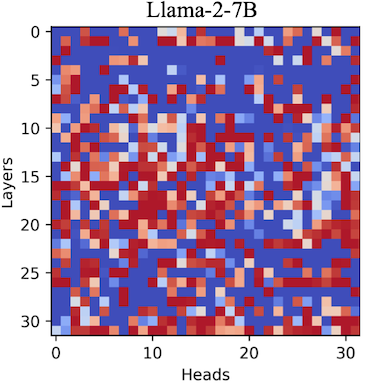 |
e.g., Llama2-7B: 약 1천 개 만 학습 (32개 레이어 x 32개 MHA) 8 A100 GPUs 기준 몇 시간 내 학습
15.5.2 DuoAttention: Deployment
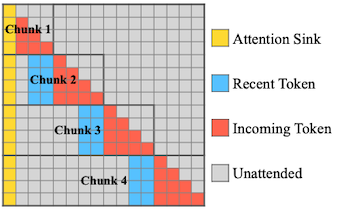
streaming head는 고정된 크기(constant)의 KV cache만을 사용하므로, chunked pre-filling에서 메모리 사용량 및 지연시간을 크게 줄일 수 있다.
| Decoding | Chunked Pre-Filling |
|---|---|
|
 |
-
시간 복잡도:
-
메모리 복잡도:
: sequence length, : chunk size
15.5.3 DuoAttention: Results
(생략)
15.6 Quest: Query-Aware Sparsity
Quest: Query-Aware Sparsity for Efficient Long-Context LLM Inference 논문(2024)
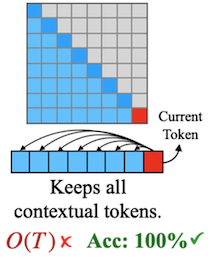
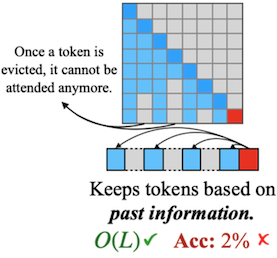
KV cache 크기를 압축하는 기존 방법은, (지금은 중요하지 않지만) 나중에 중요한 역할을 하는 token을 제거하여 복구할 수 없는 정보 손실을 유발할 수 있었다.
| Dense Attention | Query-Agnostic Sparsity (StreamingLLM, H2O, etc.) |
Query-Aware Sparsity (Quest) |
|---|---|---|
 |
 |
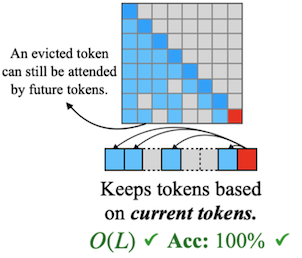 |
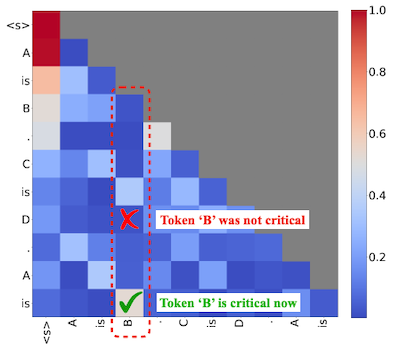
Notes: 예를 들어, 토큰 ‘B'는 (A is B 정답인 만큼) current query 'is'(마지막 'is')에서 중요하다. 그러나 이전까지는 어떠한 다른 쿼리에서도 중요하게 계산되지 않는다.
- 관찰: 중요도(criticality) 판단은 query vector 에 굉장히 dependent하게 이루어진다.
15.6.1 Query-Aware Sparsity
Quest는 앞선 관찰을 토대로 KV cache page 중요도를 동적으로 계산하는 방법을 제안하였다.
- Key 페이지에서 채널별 max, min 값( , )만을 메타데이터화 (Reduced Keys)
for i = 1 to dim do
   M_i = max(M_i, k_i)
   m_i = min(m_i, k_i)
end for
-
Current query 와 , 으로 채널별 upper bound 계산
attention weight의 upper bound를 중요도로 사용한다.
Initialize score = 0
for i = 1 to dim do
  score += MAX(q_i * max, q_i * min)
end for
- 중요도 점수에 따라 Top-k page만 선택하여 sparse attention 수행
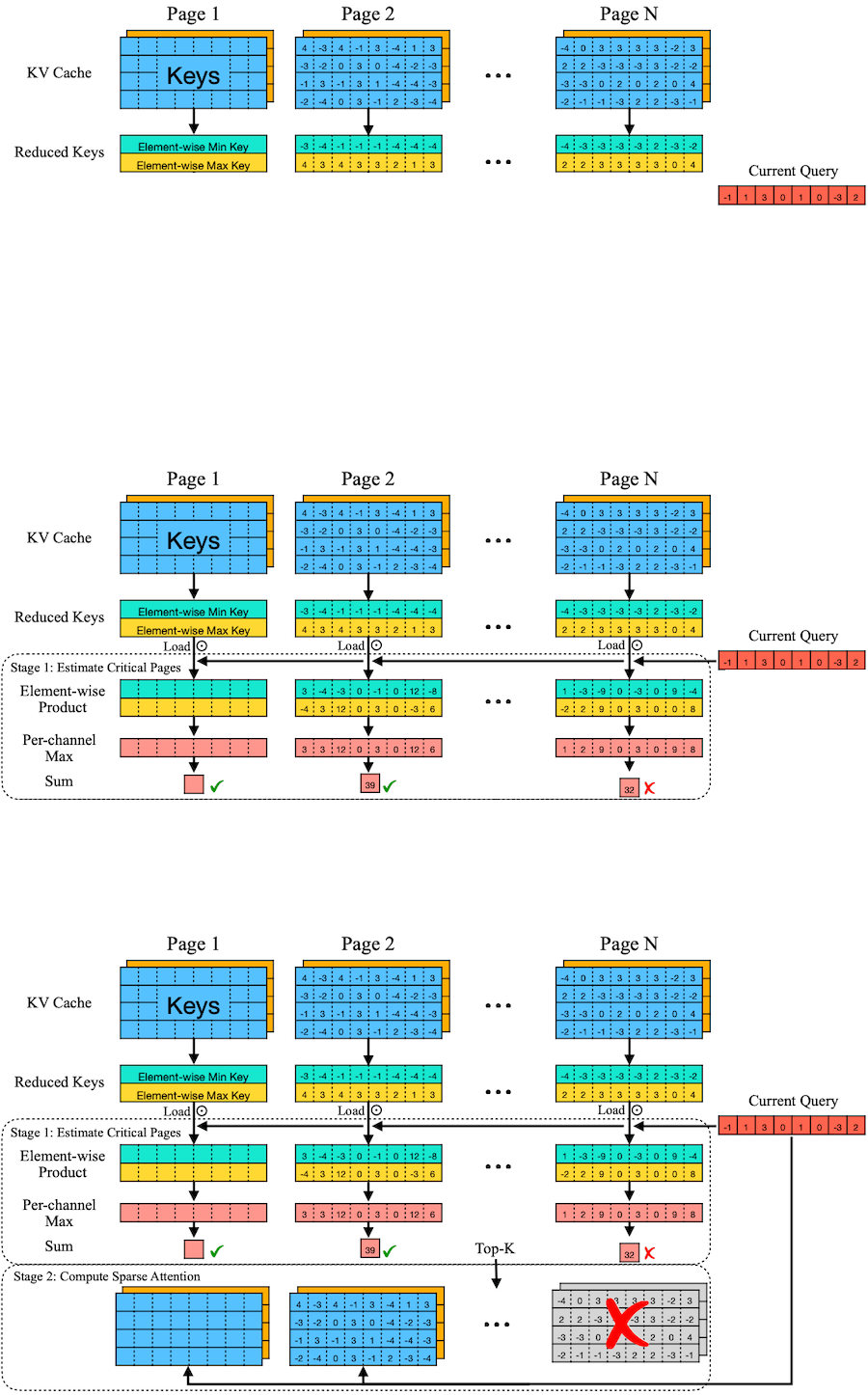
파란색, 주황색: 각각 K page, V page
예시의 page dim=4이나, 실제로는 16이나 64 차원을 갖는다.
15.6.2 Quest: Results
(생략)
15.7 Beyond Transformers: Mamba
Mamba: Linear-Time Sequence Modeling with Selective State Spaces 논문(2023)
Maarten Grootendorst: A Visual Guide to Mamba and State Space Models
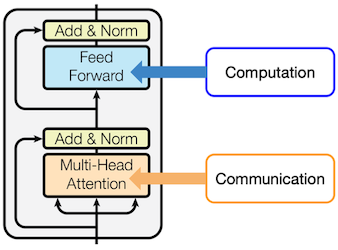
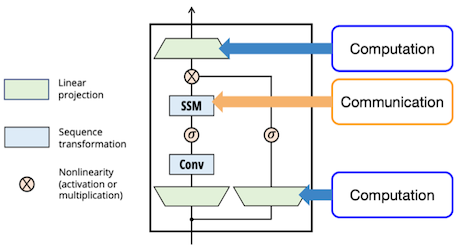
다음과 같은 관점으로 LLM의 두 가지 중요한 연산을 해석할 수 있다.
-
token 간 communication = Attention Mamba's SSM
-
단일 token 내 computation = MLPs
Mamba는 attention 기반의 communication을 Selective State Space Models(SSMs) 구조로 대체한다.
long sequences 대상으로 linear time processing 달성
| Transformer Block | Mamba Block |
|---|---|
 |
 |
15.7.1 Background: State-Space Models (SSMs)
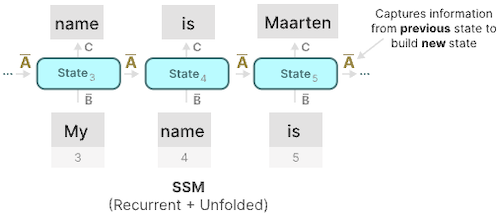
SSM은 hidden state(입력 시퀀스에 대한 current knowledge), 입력 정보 , 출력 간의 관계를 모델링한다.
| Matrix | Role | Description |
|---|---|---|
| state transition을 제어 | How should I forget or update the state over time? | |
| 입력을 hidden state로 매핑 | What part of the new input should I remember? | |
| state를 출력으로 매핑 | How can I use the state for a good prediction? |
학습의 최적화는 Linear Recurrence가 Global Convolution와 수학적으로 동등하다는 사실을 이용한다.
Step 0:
Step 1:
Step 2:
15.7.2 Selective State-Space Model
그러나, SSM에서 행렬 는 모든 입력에 동일(static)하므로, 불필요한 부분을 제외하고 선택적으로 집중하는 능력이 떨어진다.
Mamba는 이러한 SSM 모델의 한계를 극복하기 위해 selective mechanism을 결합하였다.
-
: 현재 입력 에 집중할지 무시할지 결정 (step size)
-
SSM 파라미터 : input dependent (time-varying)
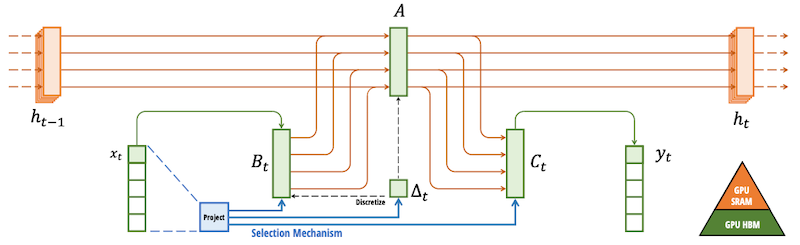
: 아래 RNN gating과 유사하게 동작하며, 에 대한 linear projection으로 계산되므로 input dependent하다.
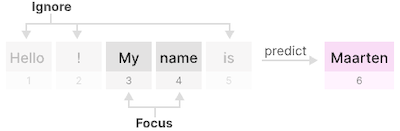
- 가 클수록 현재 입력 에 집중 (이전 상태를 잊어버림)
다음 예시는 step size에 따라 focus가 변화한 모습을 보여준다.
15.7.3 Fast Training using Parallel Scan
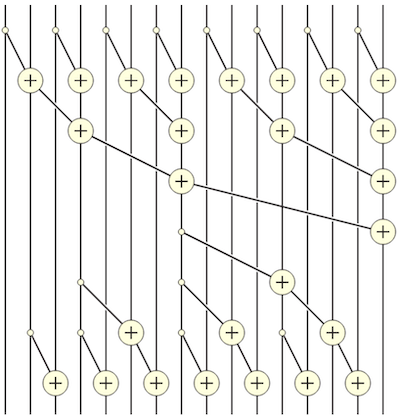
time-varying한 설계 방식의 문제는, 기존처럼 global convolution의 가속화 기법을 적용할 수 없게 만든다. 논문에서는 이를 Parallel Scan Algorithm을 활용하여 해결한다.
Notes: 배열의 'prefix sum' 계산하는 알고리즘과 유사
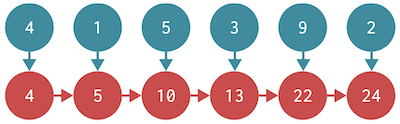
다음 예시는 hidden state 를 병렬로 계산하는 과정으로 이해할 수 있다.
15.7.4 Hybrid Models: Jamba
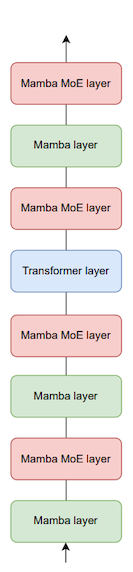
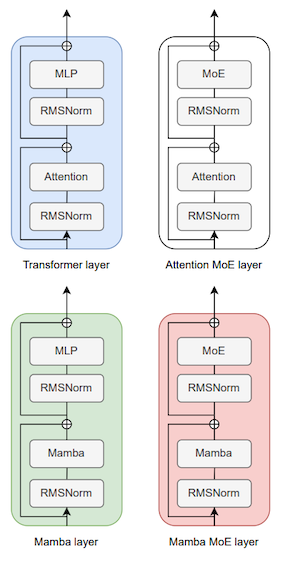
Jamba는 Mixture of Experts(MoE) 모듈을 포함해, Mamba와 Transformer 블록을 결합한 하이브리드 모델이다.
| 단일 Jamba Block | Different Types of Layers |
|---|---|
 |
 |