13 LLM Deployment Techniques
EfficientML.ai Lecture 13 - LLM Deployment Techniques (MIT 6.5940, Fall 2024)
13.12 Metrics for LLM Serving
databricks: LLM Inference Performance Engineering: Best Practices
다음은 LLM serving에서 주요하게 다루는 네 가지 성능 지표이다.
-
Goal: TTFT, TPOT 최소화, throughput 최대화
-
Trade-off: throughput vs. TPOT
| Metric | Description |
|---|---|
| Time to First Token (TTFT) | 사용자가 쿼리를 입력한 이후, 모델 출력을 보기까지 걸리는 시간 |
| Time Per Output Token (TPOT) | 각 사용자의 출력 토큰을 생성하는 데 걸리는 시간 |
| Latency | (TTFT) + (TPOT * 생성할 토큰 수) |
| Throughput | 모든 사용자 요청에 대해, 초당 생성할 수 있는 출력 토큰의 수 |
e.g., 100ms/1 token: TPOT = 10 tokens/second(\~ 450words/minute)
13.12.1 Key Heuristics for Model Evaluation
다음은 모델 성능과 관련된 대표적인 세 가지 휴리스틱 요소이다.
| Heuristic | Description |
|---|---|
| Output Length | latency 좌우 |
| Input Length | TTFT에 영향을 미치나, latency 영향은 비교적 적음 (e.g., MPT 모델 latency: 512개 입력 토큰 추가 < 8개 출력 토큰 추가) |
| Model Size | 대형 모델일수록 긴 latency (단, 비례하지는 않음) (e.g., Llama-70B: 2x Llama-13B 수준) |
이때, input length는 하드웨어 제약 조건을 반드시 고려해야 한다.
e.g., context length=2048 tokens의 MPT-7B 서빙: A100-80GB 이상의 GPU 권장
13.13 vLLM and Paged Attention
Efficient Memory Management for Large Language Model Serving with PagedAttention 논문(2023)
다음은 sequence length가 다른 두 Request를 처리하는 예시로, 대표적인 KV cache의 메모리 낭비 요인을 보여준다.
-
Internal fragmentation: unknown output length에 따른 over-allocation
-
Reservation: 현재 사용하지 않으나, 이후 사용할 메모리를 미리 할당
-
External fragmentation: 서로 다른 sequence length에 의해 발생

(sequence length)
Request A: 최대 2048,Request B: 최대 512
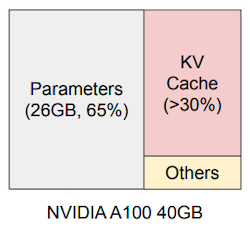
입력 시퀀스 길이는 매우 가변적이고 예측하기 어렵기 때문에, 단편화(fragmentation) 및 예약(reservation)으로 인해 KV cache를 60\~80% 만큼 낭비하게 된다.
Notes: 13B 파라미터 LLM 모델을 NVIDIA A100(40GB)에서 서빙할 때의 메모리 할당 예시
13.13.1 PagedAttention
vLLM Blog: Easy, Fast, and Cheap LLM Serving with PagedAttention
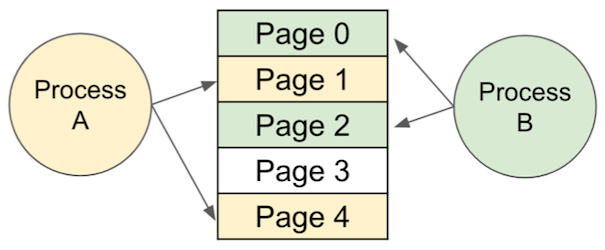
논문에서는 OS(Operating System)에서 영감을 받은, virtual memory 및 paging 기반의 attention 연산 알고리즘인 PagedAttention을 제안하였다.
이때 KV cache는 block 단위로 분할되며, 블록은 정해진 개수의 K, V 값을 갖는다.
| Memory Management in OS | Memory Management in vLLM |
|---|---|
 |
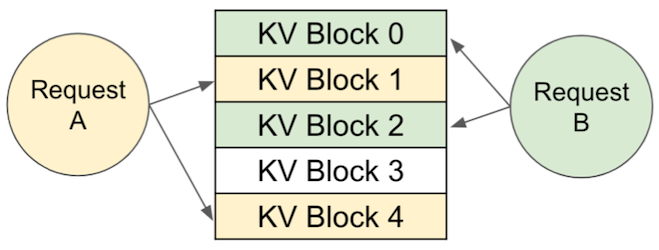 |
| pages | blocks |
| bytes | tokens |
| processes | sequences |
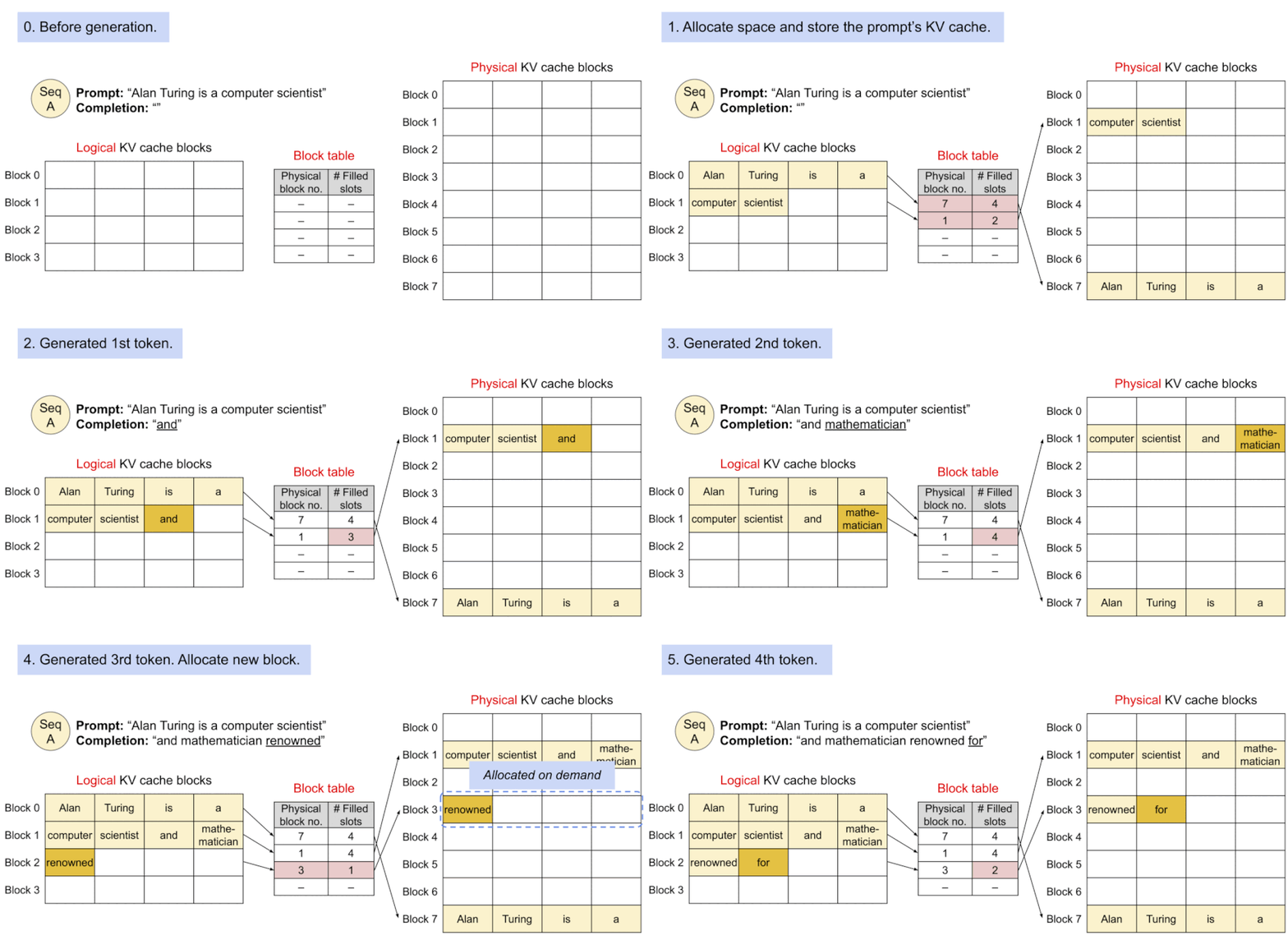
다음은 PagedAttention 구현에서의 attention 연산 과정을 보여주는 예시다.
Prompt: "Alan Tuning is a computer scientist", Completion: "and mathematician renowned for"
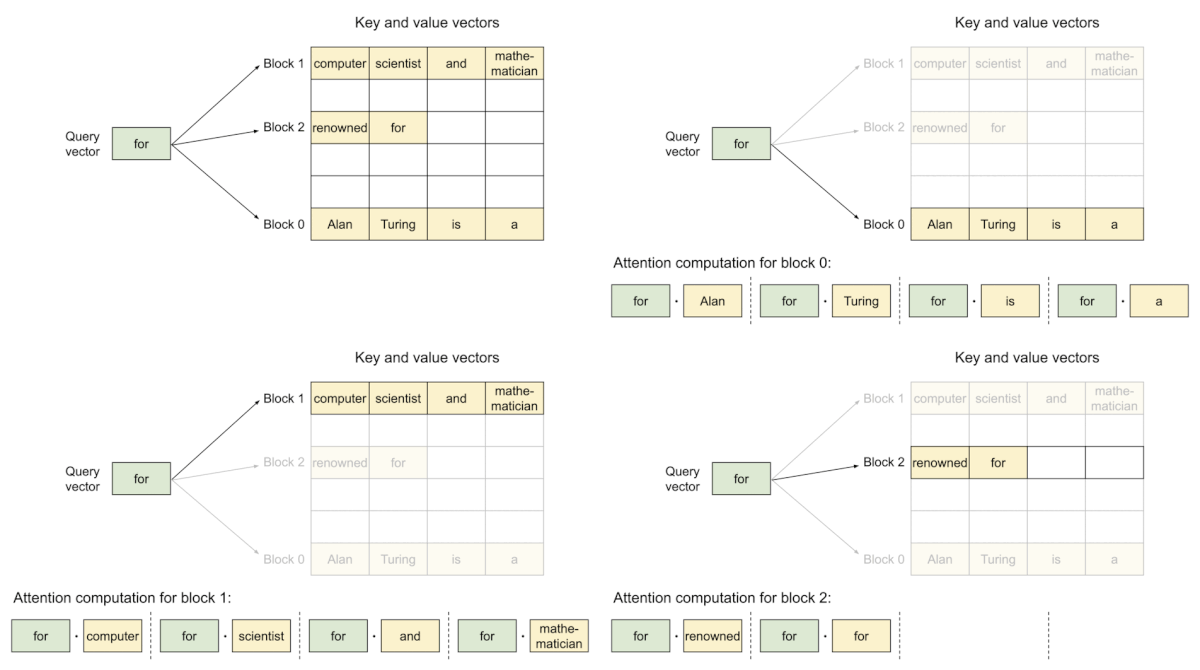
KV block은 virtual memory를 기반으로 하므로, physical memory에서 불연속적으로 저장될 수 있다.
13.13.2 Block Table Translation in vLLM
vLLM: 논문에서 제시한 serving engine
다음은 PagedAttention에서 출력을 생성하는 과정을 보여준다. 블록의 매핑은 block table을 통해 관리되며, 정해진 토큰 수를 초과하면 새로운 블록을 할당한다.
13.13.3 Prompt Sharing in Parallel Sampling
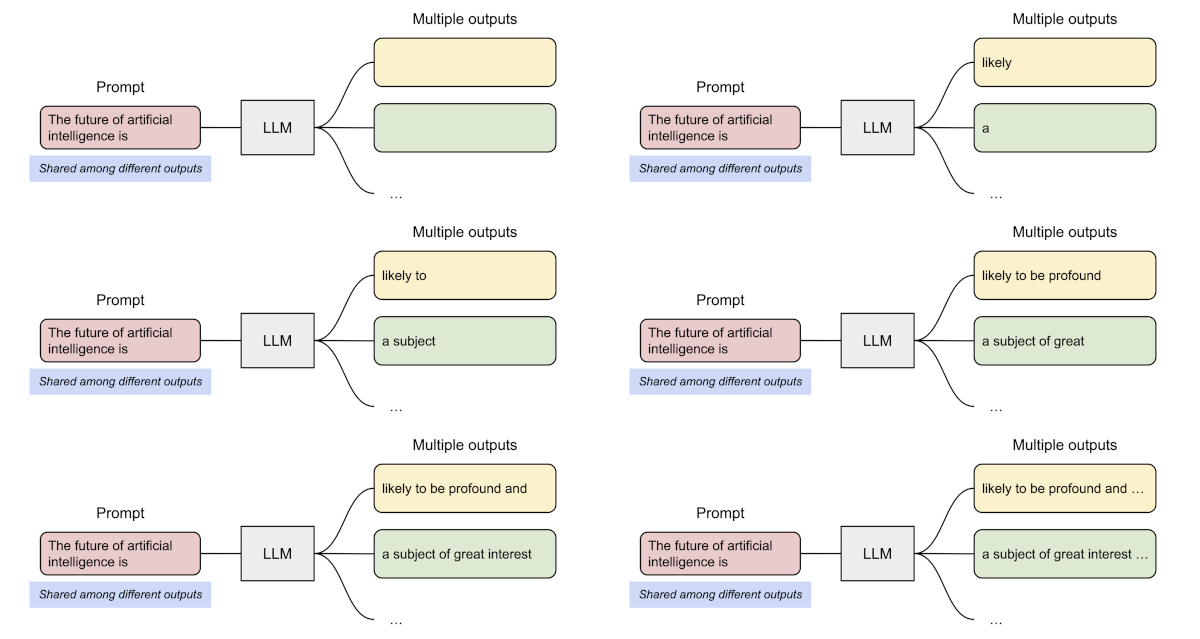
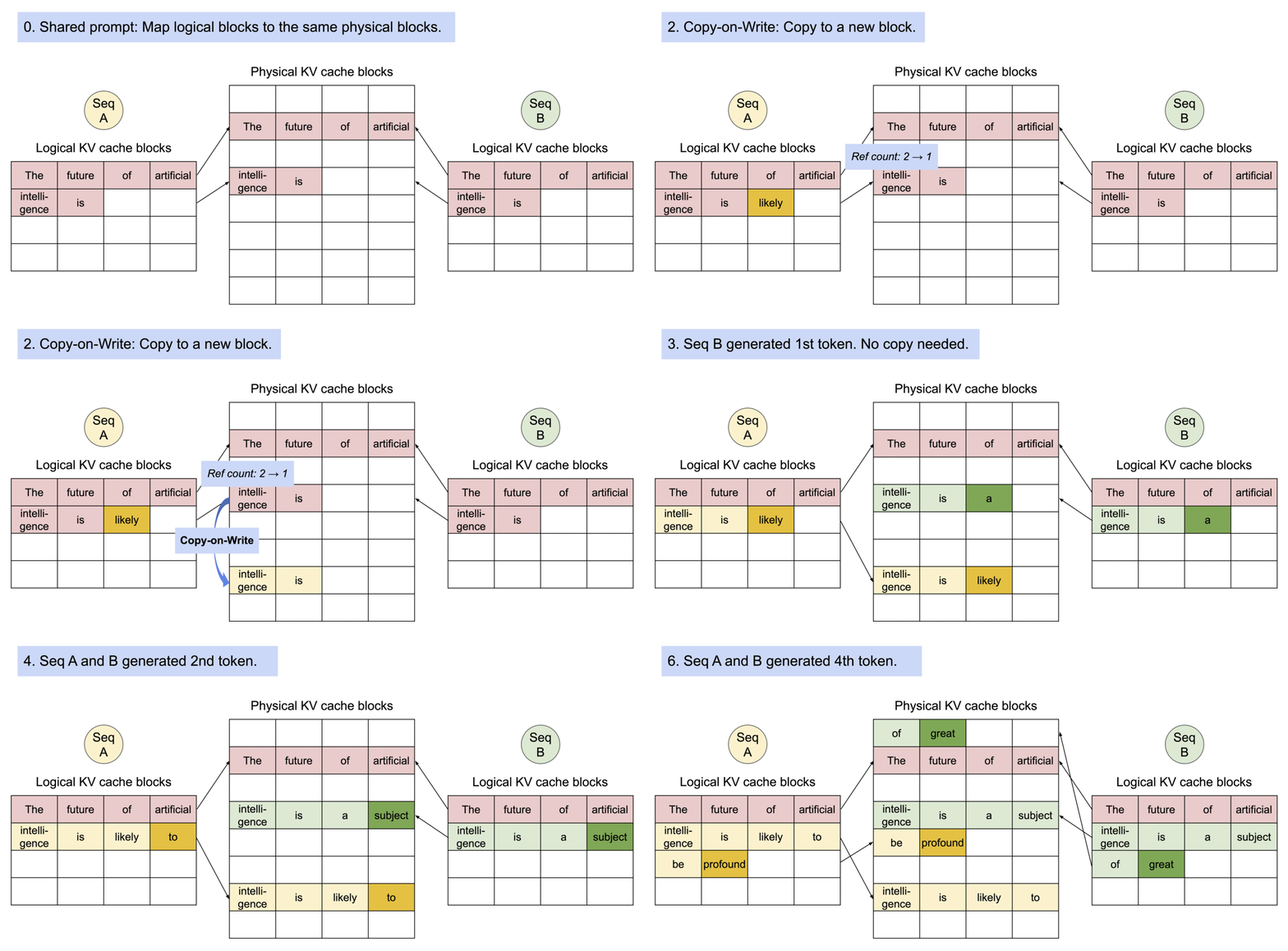
parallel sampling이란 동일한 프롬프트에서 여러 개의 출력 시퀀스를 생성하는 것을 의미한다.
다음은 PagedAttention에서 parallel sampling을 수행하는 과정을 보여준다. (동일한 물리적 KV cache 블록를 공유)
13.14 FlashAttention
FlashAttention: Fast and Memory-Efficient Exact Attention with IO-Awareness 논문(2022)
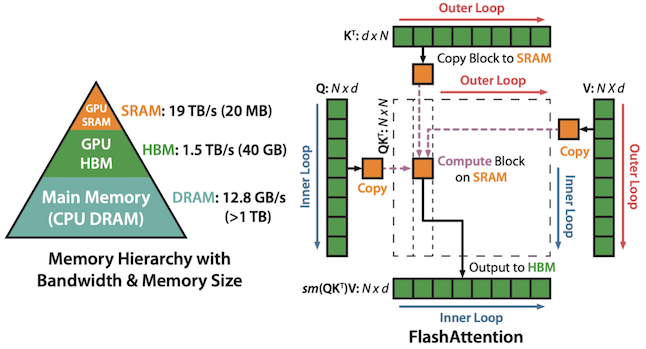
FlashAttention은 거대한 x attention 행렬을 모두 메모리에 저장하는 대신, SRAM 크기에 최적화된 타일 단위로 attention 연산을 수행하는 기법이다. (tiling)
이를 통해, HBM(High Bandwidth Memory)과 GPU on-chip SRAM 사이의 메모리 읽기/쓰기를 줄일 수 있다.
-
Outer Loop(빨간색): on-chip SRAM에 , block 적재
-
Inner Loop(파란색): iterative하게 block을 on-chip SRAM에 적재하고 attention 연산 (출력은 HBM에 기록)
| FlashAttention | Speedup(GPT-2) |
|---|---|
 |
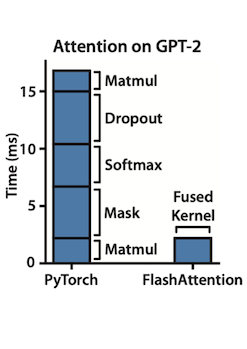 |
읽기/쓰기 오버헤드를 더욱 줄이기 위해, 두 커널을 하나로 합쳐서 구현하였다. (kernel fusion)
13.14.1 FlashAttention: Results
FlashAttention-2: Faster Attention with Better Parallelism and Work Partitioning 논문(2023)
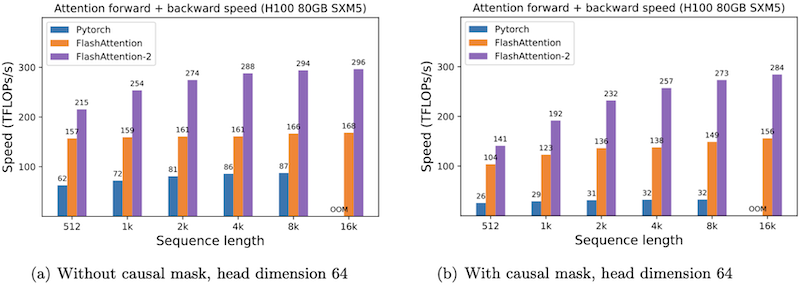
다음은 NVIDIA H100 GPU에서, PyTorch와 FlashAttention의 attention 연산 속도를 비교한 결과이다.
13.15 Speculative Decoding
Fast Inference from Transformers via Speculative Decoding 논문(2022)
기존의 decoding 과정은 token by token, 즉 한 번에 하나의 토큰을 생성하는 방식으로 동작한다. (autoregressive decoding)
예를 들어, 12개의 토큰으로 구성된 문장을 만드는 데만, 12번의 forward pass가 필요하다. 모델 가중치 전체를 읽어야 하므로 memory-bounded하며, 대체로 연산 리소스를 충분히 활용하지 못한다.
Notes: GPU는 1초에 수백 조 연산이 가능하지만, 메모리 대역폭은 초당 수 조 바이트에 불과하다.
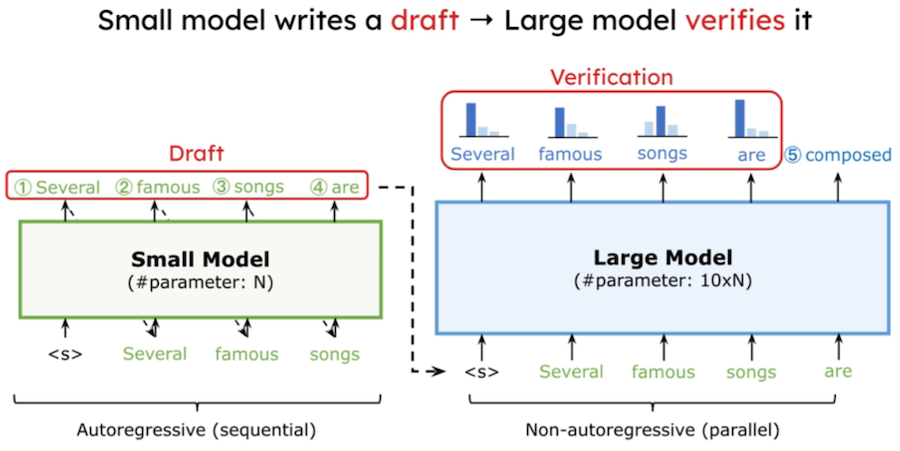
따라서 논문에서는 이러한 연산 리소스를 활용하여, 여러 토큰을 병렬로 계산하는 Speculative Decoding 기법을 제안하였다. 해당 기법에서는 두 종류의 모델을 활용한다.
-
Draft Model: 소형 LLM (e.g., 7B), autoregressive
-
Target Model: 대형 LLM (e.g., 175B), non-autoregressive
13.15.1 Speculative Decoding: Procedure
TitanML: In the Fast Lane! Speculative Decoding — 10x Larger Model, No Extra Cost
speculative decoding은 다음 절차로 수행된다. (초록색: accepted, 빨간색: rejected, 파란색: correction)
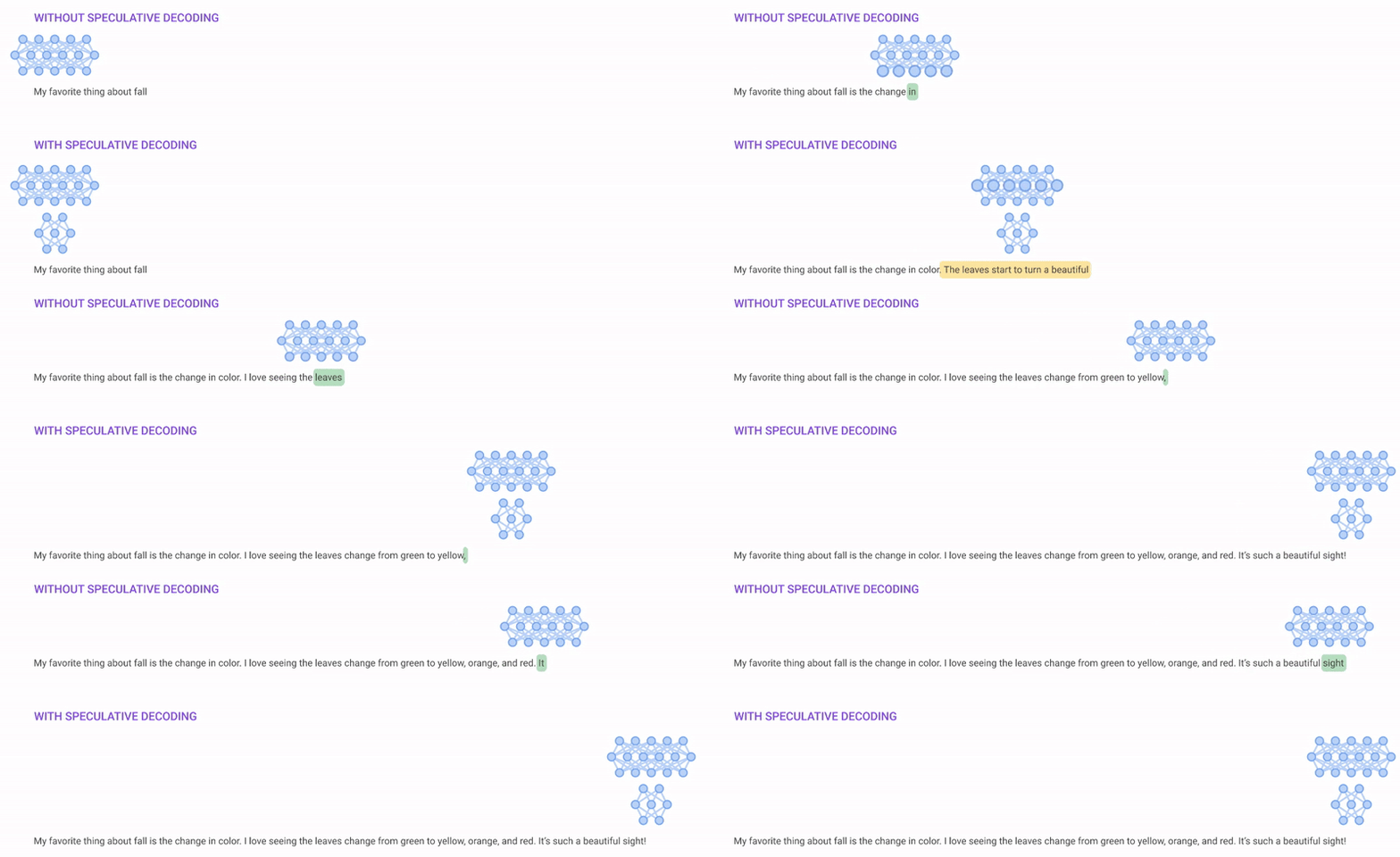
(1) draft model : autoregressive하게 개 토큰(draft)을 생성한다.
- : 초기 프롬프트 시퀀스, : 타겟 시퀀스 길이
(2) target model : 병렬로 draft token과 새 토큰 1개를 전달 받아, 위치별 확률을 계산한다. (logit)
- e.g., 위치의 확률
draft model: , target model:
Notes: 토큰의 decoding에서는, 부수적으로 위치의 확률도 계산된다.
(3) sampling: 개 토큰의 accept/reject(및 correction) 여부를 결정한다.
-
e.g., greedy sampling
-
첫 번째 불일치 직전까지의 토큰: accept하여 입력 시퀀스에 추가. ("ate")
-
불일치 발생 위치: target model의 토큰을("my") 입력 시퀀스에 추가하고, 과정을 다시 반복
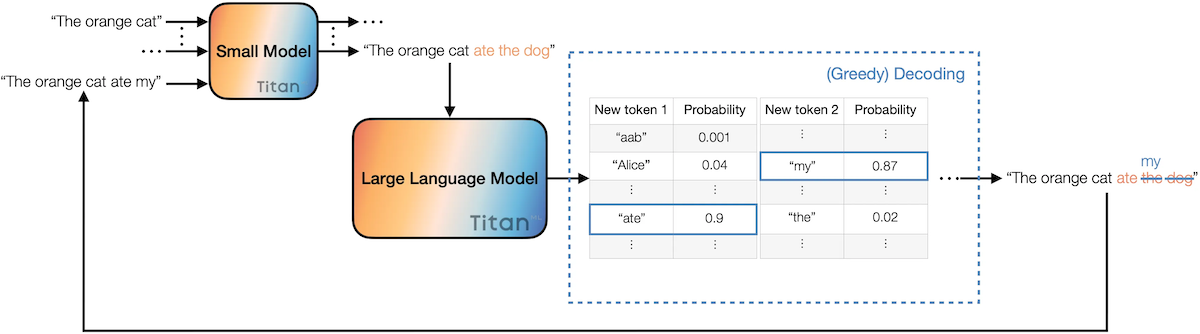
Token Acceptance Rate (TAR): draft model이 생성한 토큰 중 accept되는 비율
13.16 Batching
Batching은 동시에 여러 입력(request)을 묶어서 처리하여, GPU throughput을 최대화하고 idle time은 최소화하는 기법이다.
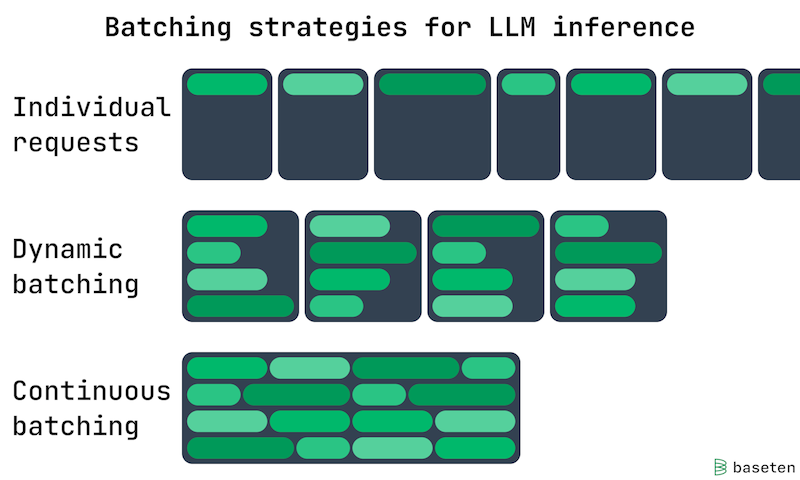
Batching은 크게 네 가지 방법으로 분류할 수 있다.
-
No Batching: 모든 request를 개별적으로 처리
-
Static Batching: 처리 전, full batch가 형성될 때까지 대기
-
Dynamic Batching: full batch 혹은 설정한 delay가 지나면 처리 (throughput, latency trade-off 고려)
-
Continuous Batching (a.k.a., In-Flight Batching)
13.16.1 Dynamic Batching
Matt Howard, Philip Kiely: Continuous vs dynamic batching for AI inference
latency가 중요한 모델 서빙(e.g., Stable Diffusion)에서는, batch가 가득 차거나 설정한 지연 시간이 지나면 처리하는 dynamic batching이 유용한 수단일 수 있다.
-
static batching: full batch(4 requests) 대기
-
dynamic batching: 설정한 지연 시간이 지나면, full batch 여부와 관계 없이 처리
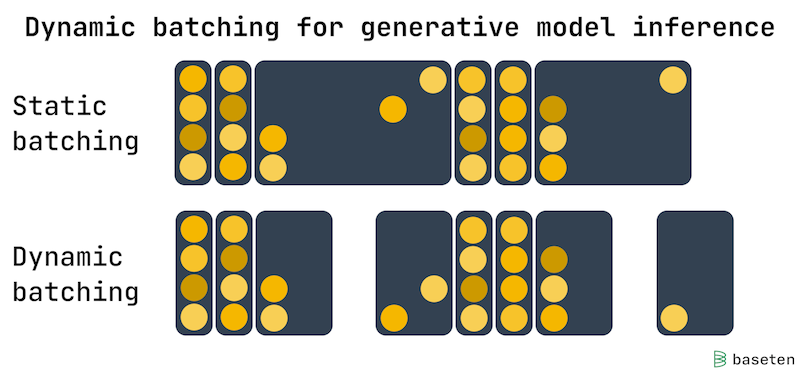
특히 균일한 추론 시간을 갖는 생성형 모델에서, throughput-latency trade-off 균형을 잘 맞출 수 있다.
13.16.2 Continuous Batching (In-Flight Batching)
continuous batching은 token-by-token 방식으로, 기존의 request가 끝나면 바로 새로운 request를 처리하는 기법이다.
13.17 TensorRT-LLM Public Release
다음은 NVIDIA의 TensorRT-LLM 라이브러리에서 지원하는 주요 기능이다.
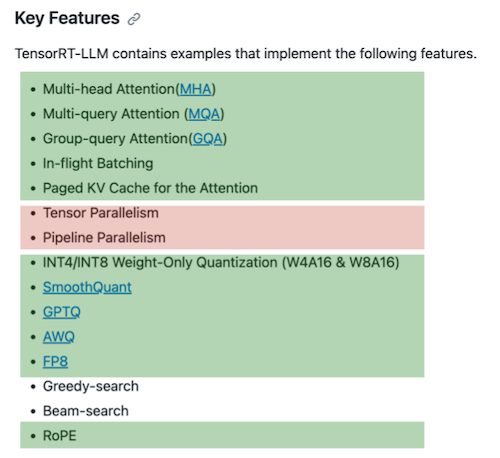
초록색: covered in the lecture