12 Transformer and LLM (Part I)
EfficientML.ai Lecture 12 - Transformer and LLM (Part I) (MIT 6.5940, Fall 2023, Zoom)
NLP 도메인의 task는 크게 두 가지로 나눌 수 있다.
-
Discriminative task: sentiment analysis, text classification, textual entailment 등
-
Generative task: language modeling, machine translation, summarization 등
| Discriminative | Generative |
|---|---|
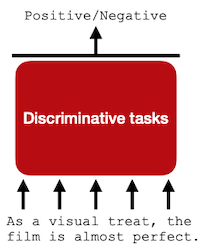 |
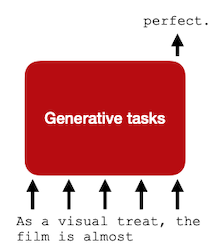 |
| 입력 문장의 positive/negative 분석 (sentiment analysis) |
입력 문장에 이어질 단어를 예측 (language modeling) |
12.1 Pre-Transformer Era: Recurrent Neural Networks (RNNs)
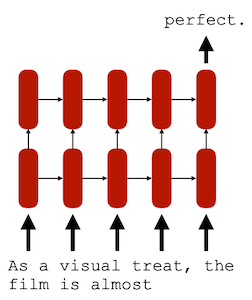
Transformer가 등장하기 전, 자연어 처리를 위해 주로 활용된 모델은 RNN이었다.
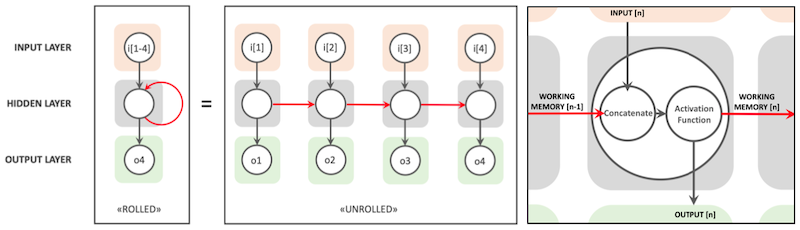
이때 RNN은 단방향/양방향(Uni-directional/Bi-directional) 설계에 따라서 task를 다르게 수행하게 된다.
| Discriminative | Generative |
|---|---|
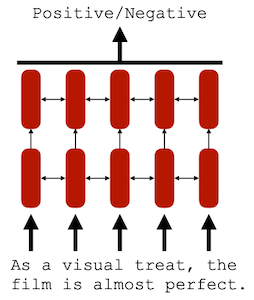 |
 |
| Bi-directional(양방향) | Uni-directional(단방향) |
| Encoding | Decoding |
12.1.1 Problem with RNNs/LSTMs: Hard to Model Long-Term Relationships
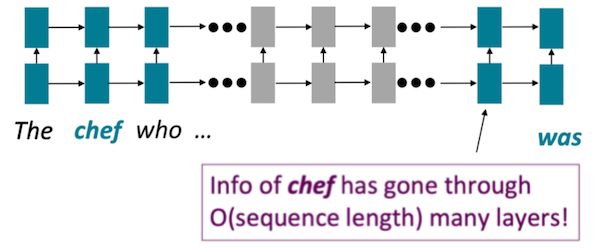
하지만 RNN은 working memory면에서, long-term dependancies를 유지하기 어렵다. (LSTM은 해결) 다음은 중간에 긴 문장(who ...)이 삽입된 입력에서 RNN을 묘사한 예시다.
-
두 토큰의 interaction: steps 필요
-
이미지와 달리, 언어는 대체로 locality를 갖지 않는다.
12.1.2 Problem with RNNs/LSTMs: Limited Training Parallelism
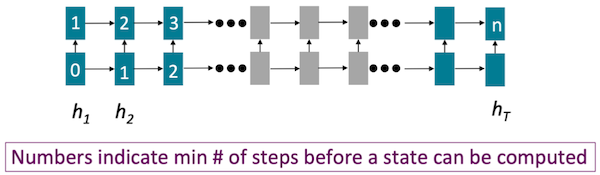
또한 token 사이의 의존성에 의해 scalability가 제한된다.
-
state는 이전 state에 의존적이다.
-
state 을 얻기 위해 steps이 필요하다.
12.2 Pre-Transformer Era: Convolutional Neural Networks (CNNs)
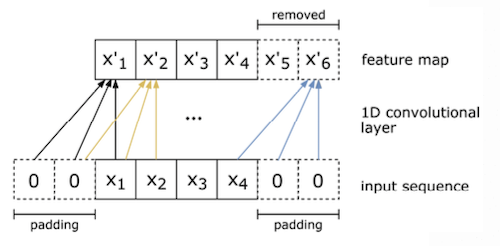
scalability를 고려한 대안으로, token 사이에 의존성이 존재하지 않는 CNN을 활용하는 시도가 있었다.
단어는 특정한 길이(일반적으로는 100)를 갖는 벡터로 임베딩되며, 1D convolution(kernel width=vector length)을 통해 처리된다.
| 1D Convolution | Sliding Window |
|---|---|
 |
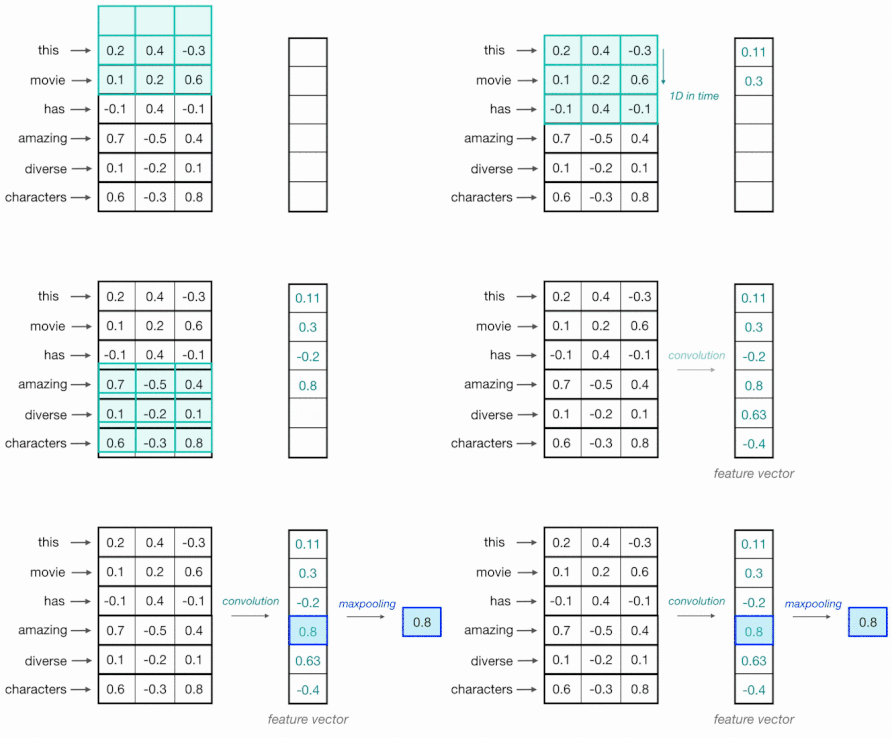 |
- (-) limited context information: receptive field가 제한적이다.
12.3 Transformer
2017년에 발표된 Transformer는 attention 메커니즘에 기반한 모델이다.
| Architecture | Sequence |
|---|---|
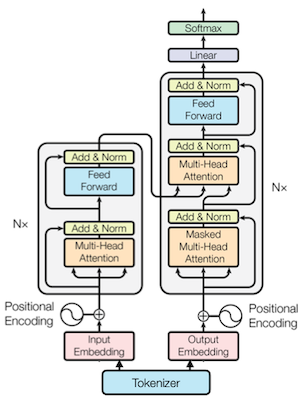 |
(1) Tokenize words (word tokens) (2) Map tokens into embedding vectors (3) Embeddings go through transformer blocks ( MHA, FFN, LN, Residual)(4) Positional encoding (5) Final prediction with linear head |
12.3.1 Tokenize Words
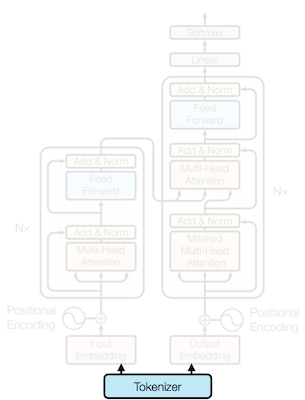
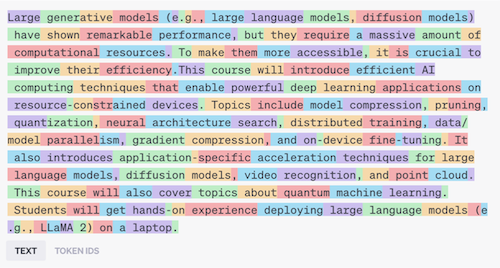
tokenizer는 단일 word를 one/multiple token으로 매핑하는 작업을 수행한다. (따라서 일반적으로 단어의 수보다 token의 수가 더 많다.)
다음은 110 works로 구성된 문장을 162개 token으로 매핑한 예시다.
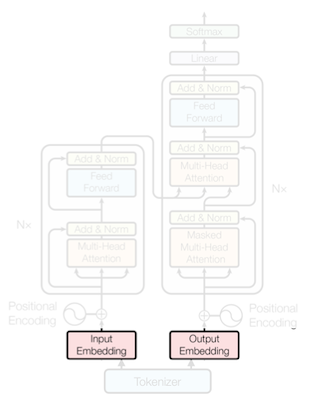
이후 절차에서 token은 embedding vector로 변환된다.
 가장 간단한 embedding 방법이라면, 각 word를 고유한 one-hot vector로 변환하는 것이다.
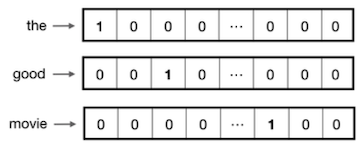
하지만 **one-hot encoding**은 vocabularies가 커질수록, 벡터의 길이 및 차원이 매우 커지게 된다.
대안인 **word embedding**에서 단어는 look-up table을 참조하여 임베딩되며, 이때의 LUT는 별도의 학습으로 획득한다.
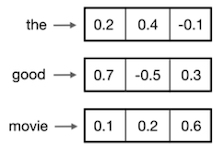
> Pre-trained Word Embedding: Word2Vec, GloVe가 대표적이다.
가장 간단한 embedding 방법이라면, 각 word를 고유한 one-hot vector로 변환하는 것이다.

하지만 **one-hot encoding**은 vocabularies가 커질수록, 벡터의 길이 및 차원이 매우 커지게 된다.
대안인 **word embedding**에서 단어는 look-up table을 참조하여 임베딩되며, 이때의 LUT는 별도의 학습으로 획득한다.

> Pre-trained Word Embedding: Word2Vec, GloVe가 대표적이다.
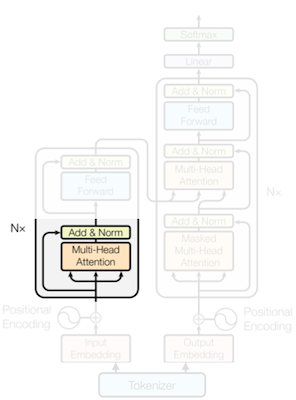 embedding은 transformer 블록 내부의 MHA(**Multi-Head Attention**)로 전달된다.
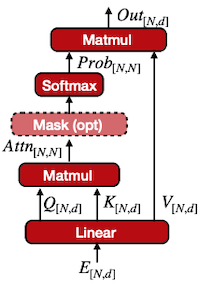
- embedding: 먼저 linear projection을 통해 벡터로 변환한다.
- **self-attention**: query, key, value 세 요소 사이의 문맥적 관계성을 캡처
> **Notes**: Query-Key-Value는 주로 retrieval system에서 활용된 설계이다.
>
> | Q-K-V | Example(YouTube search engine) |
> | --- | --- |
> | **Query** | 검색 바에 입력한 text prompt |
> | **Key** | 동영상의 titles/descriptions |
> | **Value** | 대응하는 동영상 |
이때 self-attention 연산은 다음 절차를 통해 수행된다.
(1) 와 를 내적하여 **similarity score**를 계산한다. (이때 Q,K 차원이 미치는 영향을 고려해 로 정규화한다.)
(2) softmax를 통해 **attention weight**를 구한다. (*softmax*: weight sum이 1이 되도록 정규화)
(3) attention weight와 벡터를 곱하여 **output**을 얻는다.
> attention computation complexity: 으로 expensive하다.
embedding은 transformer 블록 내부의 MHA(**Multi-Head Attention**)로 전달된다.

- embedding: 먼저 linear projection을 통해 벡터로 변환한다.
- **self-attention**: query, key, value 세 요소 사이의 문맥적 관계성을 캡처
> **Notes**: Query-Key-Value는 주로 retrieval system에서 활용된 설계이다.
>
> | Q-K-V | Example(YouTube search engine) |
> | --- | --- |
> | **Query** | 검색 바에 입력한 text prompt |
> | **Key** | 동영상의 titles/descriptions |
> | **Value** | 대응하는 동영상 |
이때 self-attention 연산은 다음 절차를 통해 수행된다.
(1) 와 를 내적하여 **similarity score**를 계산한다. (이때 Q,K 차원이 미치는 영향을 고려해 로 정규화한다.)
(2) softmax를 통해 **attention weight**를 구한다. (*softmax*: weight sum이 1이 되도록 정규화)
(3) attention weight와 벡터를 곱하여 **output**을 얻는다.
> attention computation complexity: 으로 expensive하다.
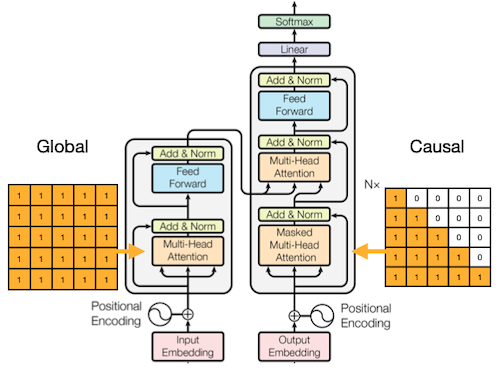 앞서 NLP의 두 가지 task를 떠올려 보자.
| Task | Visibility |
| --- | --- |
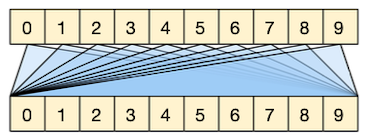
| **Discriminative**(Encoding) | future token까지 볼 수 있다. |
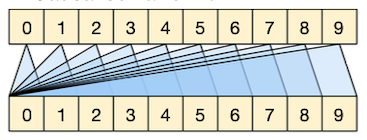
| **Generative**(Decoding) | 오직 previous token만 볼 수 있다. |
때문에 generative path에서는, 이전 token만 볼 수 있도록 attention에 마스킹을 적용한다. (casual/masked language modeling)
| Global | Causal |
| :---: | :---: |
|  |  |
앞서 NLP의 두 가지 task를 떠올려 보자.
| Task | Visibility |
| --- | --- |
| **Discriminative**(Encoding) | future token까지 볼 수 있다. |
| **Generative**(Decoding) | 오직 previous token만 볼 수 있다. |
때문에 generative path에서는, 이전 token만 볼 수 있도록 attention에 마스킹을 적용한다. (casual/masked language modeling)
| Global | Causal |
| :---: | :---: |
|  |  |
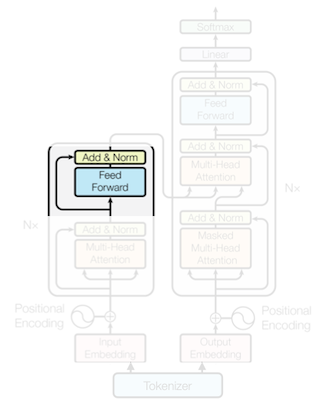 이어서 element(token) 사이의 non-linearity를 더하기 위해 **Feed-Forward Network**를 거친다.
| FFN | Variation |
| :---: | :---: |
| 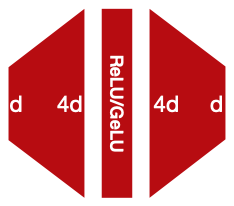 | 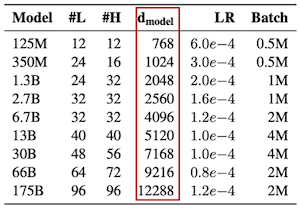 |
vanilla 구현에서는 MLP는 두 개의 linear layer로 구성된다. (ReLU/GELU activation을 사용)
이때, 두 레이어 사이에 매우 큰 hidden state를 갖는 설계가 보편적이다. (**inverted bottleneck** 형태)
이어서 element(token) 사이의 non-linearity를 더하기 위해 **Feed-Forward Network**를 거친다.
| FFN | Variation |
| :---: | :---: |
|  |  |
vanilla 구현에서는 MLP는 두 개의 linear layer로 구성된다. (ReLU/GELU activation을 사용)
이때, 두 레이어 사이에 매우 큰 hidden state를 갖는 설계가 보편적이다. (**inverted bottleneck** 형태)
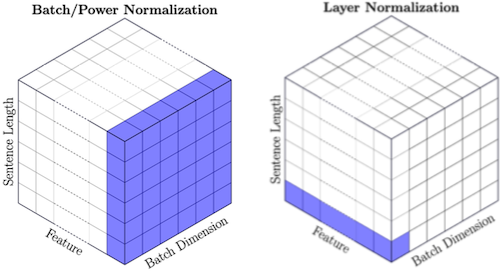
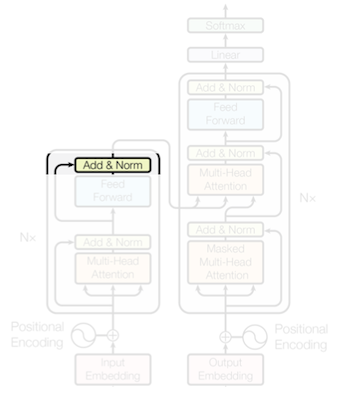 Layer Normalization은 각 token의 embedding을 정규화하여, (residual connection과 함께) 학습을 안정화하는 역할을 수행한다. (CNN의 BN과 유사)
Layer Normalization은 각 token의 embedding을 정규화하여, (residual connection과 함께) 학습을 안정화하는 역할을 수행한다. (CNN의 BN과 유사)

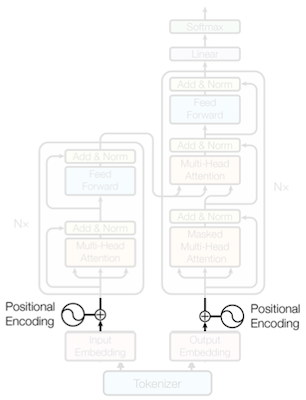 하지만 Transformer는 RNN과 달리 **sequence**를 순차적으로 처리하지 않는다. (상기한 attention, FFN 연산은 sequence를 병렬로 한번에 처리한다.)
Transformer는 이러한 문제를 해결하기 위해, PE(**Positional Encoding**)을 통해 위치 정보를 추가한다. (raw word embedding에 합산한다.)
- 문장 내 각 단어는 unique encoding을 갖는다.
- token index 의 삼각 함수(sine, cosine)로 encoding된다.
- : feature dimension
- 10000: 모든 token이 구분될 만큼 충분히 큰 임의의 상수
다음은 PE matrix를 heatmap으로 시각화한 예시다. (하나의 문장은 최대 50개 token으로 구성, 128개 차원으로 Positional Embedding 수행)
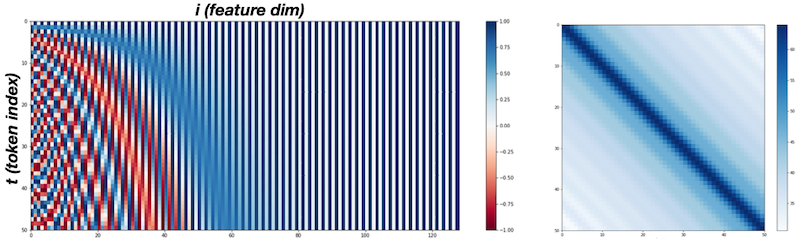
- 색상의 light dark light 반복: sine 함수 설계가 이진 bit를 교대로 사용하는 것과 유사하기 때문.
- frequency: 벡터 차원을 따라 감소한다.
하지만 Transformer는 RNN과 달리 **sequence**를 순차적으로 처리하지 않는다. (상기한 attention, FFN 연산은 sequence를 병렬로 한번에 처리한다.)
Transformer는 이러한 문제를 해결하기 위해, PE(**Positional Encoding**)을 통해 위치 정보를 추가한다. (raw word embedding에 합산한다.)
- 문장 내 각 단어는 unique encoding을 갖는다.
- token index 의 삼각 함수(sine, cosine)로 encoding된다.
- : feature dimension
- 10000: 모든 token이 구분될 만큼 충분히 큰 임의의 상수
다음은 PE matrix를 heatmap으로 시각화한 예시다. (하나의 문장은 최대 50개 token으로 구성, 128개 차원으로 Positional Embedding 수행)

- 색상의 light dark light 반복: sine 함수 설계가 이진 bit를 교대로 사용하는 것과 유사하기 때문.
- frequency: 벡터 차원을 따라 감소한다.